More often than not, the answer is a resounding “No.” Most entrepreneurs are significantly underpaid. In this issue, we’ll walk through how to figure out what you should be paying yourself—and how to actually get there. Paying yourself as a business owner isn’t just about income — it impacts taxes, cash flow, and long-term sustainability.
Why Owners Struggle With Compensation
Many business owners struggle to pay themselves fairly. Most underpay, a few overpay, and very few hit the right balance.
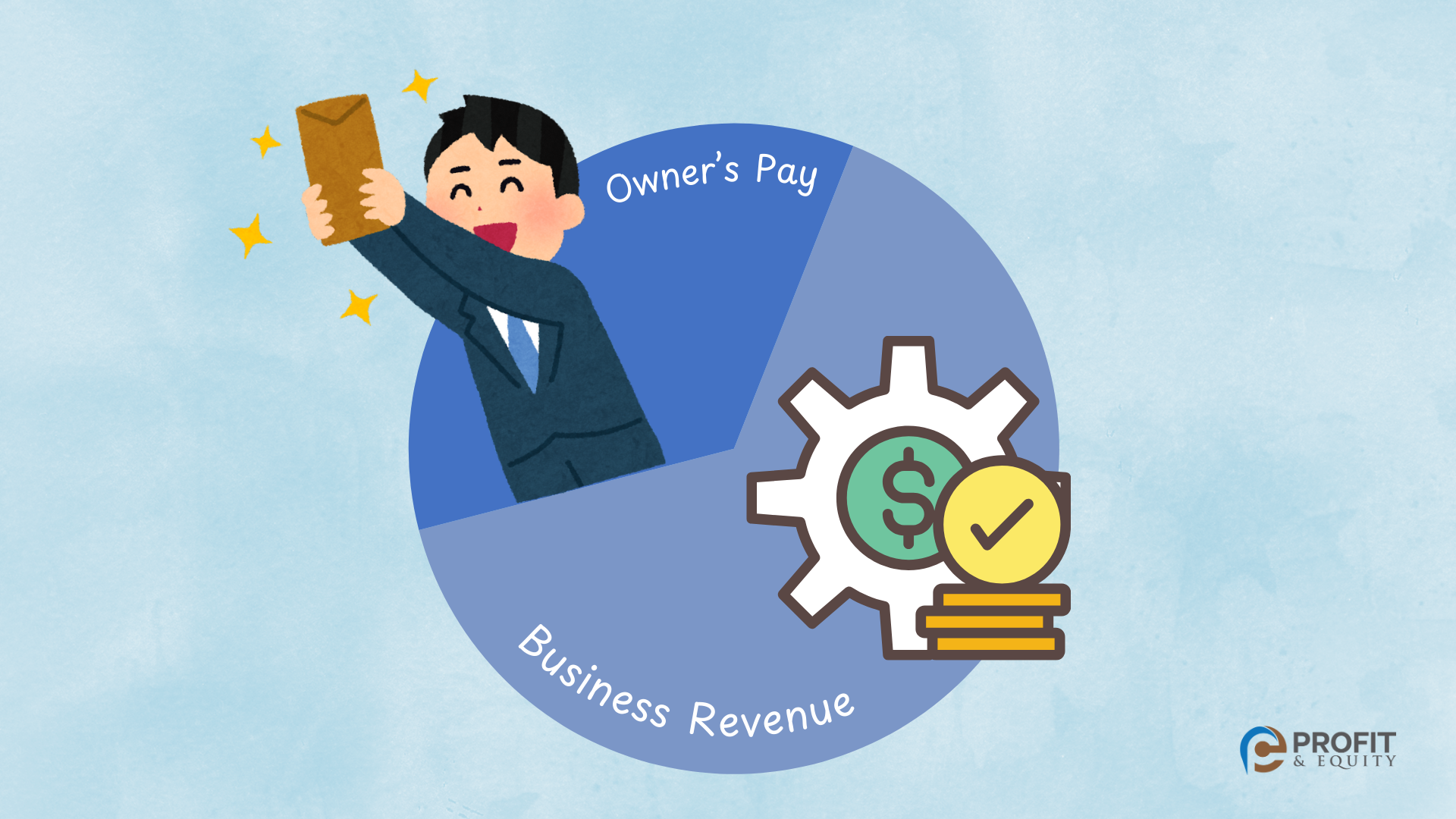
As a general guideline, business owners should aim to take 35–50% of gross revenue as compensation. However, exactly how you pay yourself depends on your business entity type.

If You’re a Corporation (S-Corp or C-Corp)
The IRS requires business owners in corporations to pay themselves a “reasonable salary”—not too high, not too low. Several factors are used to determine reasonableness, including:
- Your qualifications and experience
- The scope of your role
- Hours worked
- The company’s gross revenue
Once you determine this salary, you can put yourself on payroll. Distributions are also allowed and may be tax-free if your salary is considered reasonable.
Example 1: If your S-corp makes $100,000 annually and you only pay yourself $10,000 in salary, the IRS may reclassify part—or all—of your distributions as taxable income, resulting in a higher tax bill.
Example 2: If that same S-corp makes $100,000 and you pay yourself $50,000 in salary, the IRS is far more likely to accept it as reasonable. You can then reinvest remaining funds back into the business while staying compliant.
If You’re Not a Corporation (LLC, Sole Proprietor, or DBA)
This is where things become both simpler and more complicated. Non-corporation entities are considered pass-through entities, meaning all business revenue is automatically treated as owner income. The IRS doesn’t care how much you “pay yourself”—what matters is the business’s overall revenue.
That said, we still recommend allocating 35–50% of gross revenue for owner’s pay. A common strategy is to:
- Transfer your chosen percentage into a dedicated Owner’s Pay account
- Pay yourself weekly or bi-weekly from that account—just like payroll
This helps you create consistency while keeping your business financially healthy.
Final Takeaway
Whether you’re a corporation or a pass-through entity, paying yourself properly is about more than cutting a check—it’s about compliance, sustainability, and setting your business up for long-term success.